Real Industrial Experience in BEU's Modern Laboratory
June 17, 2026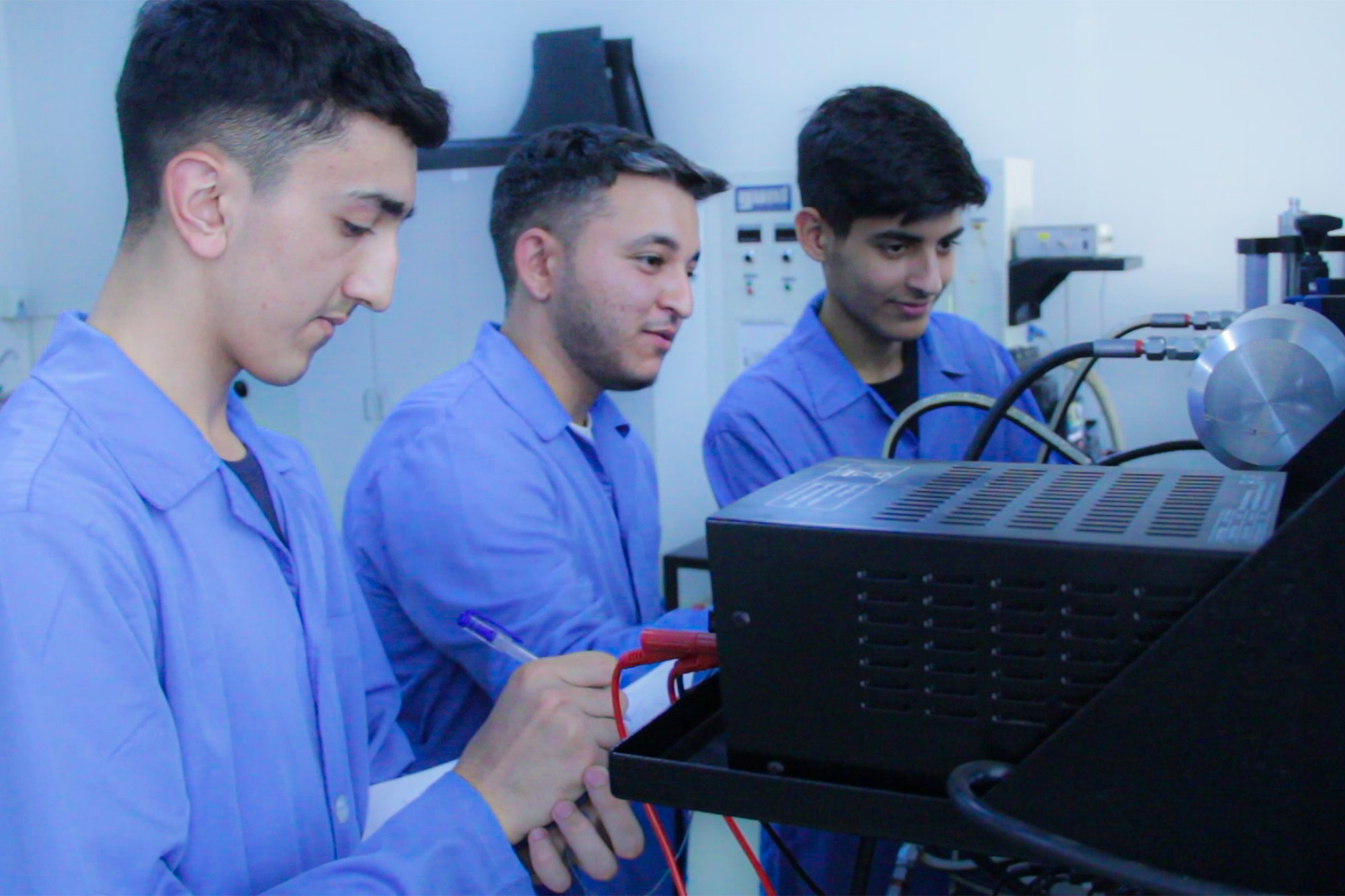
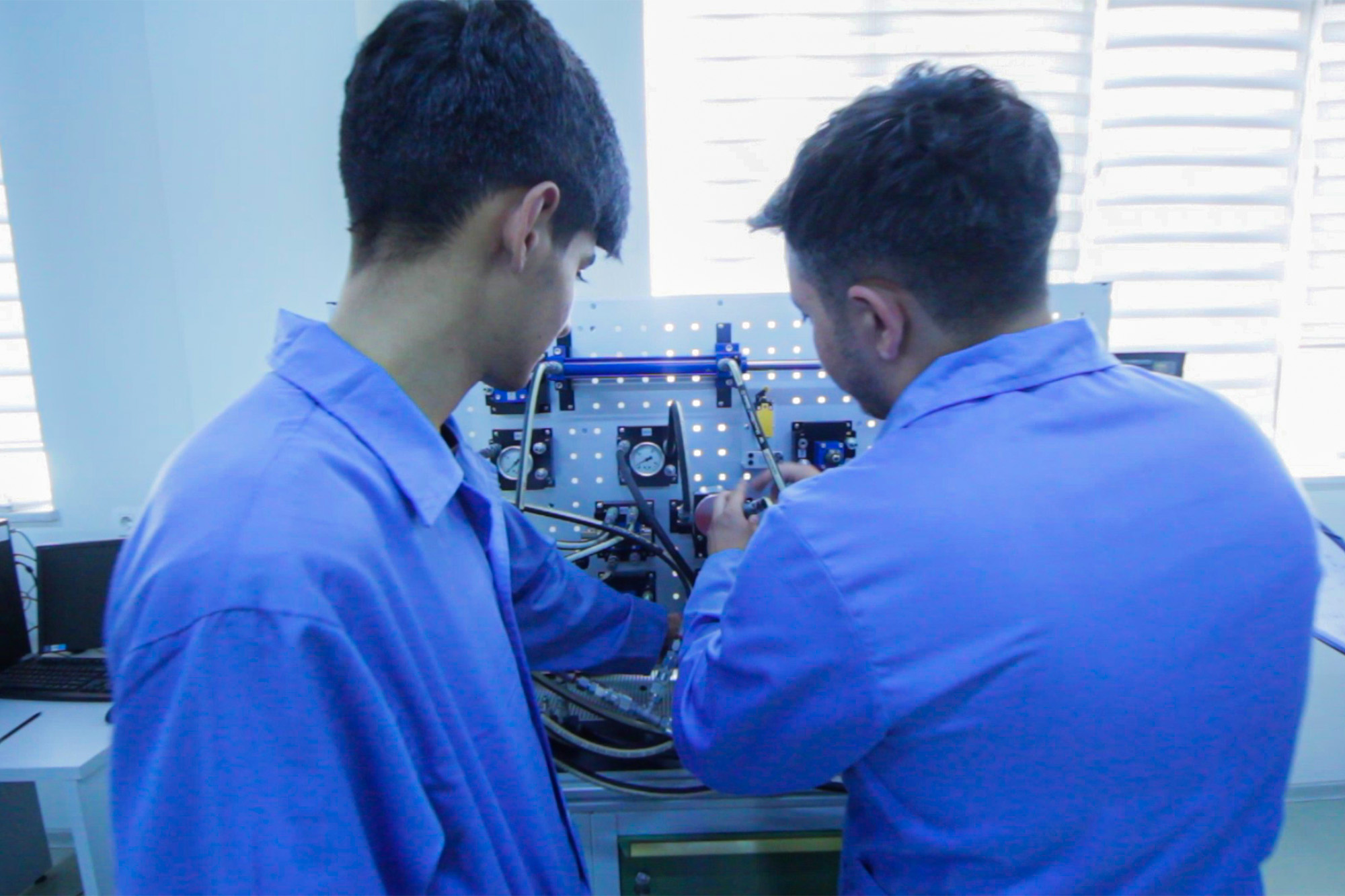
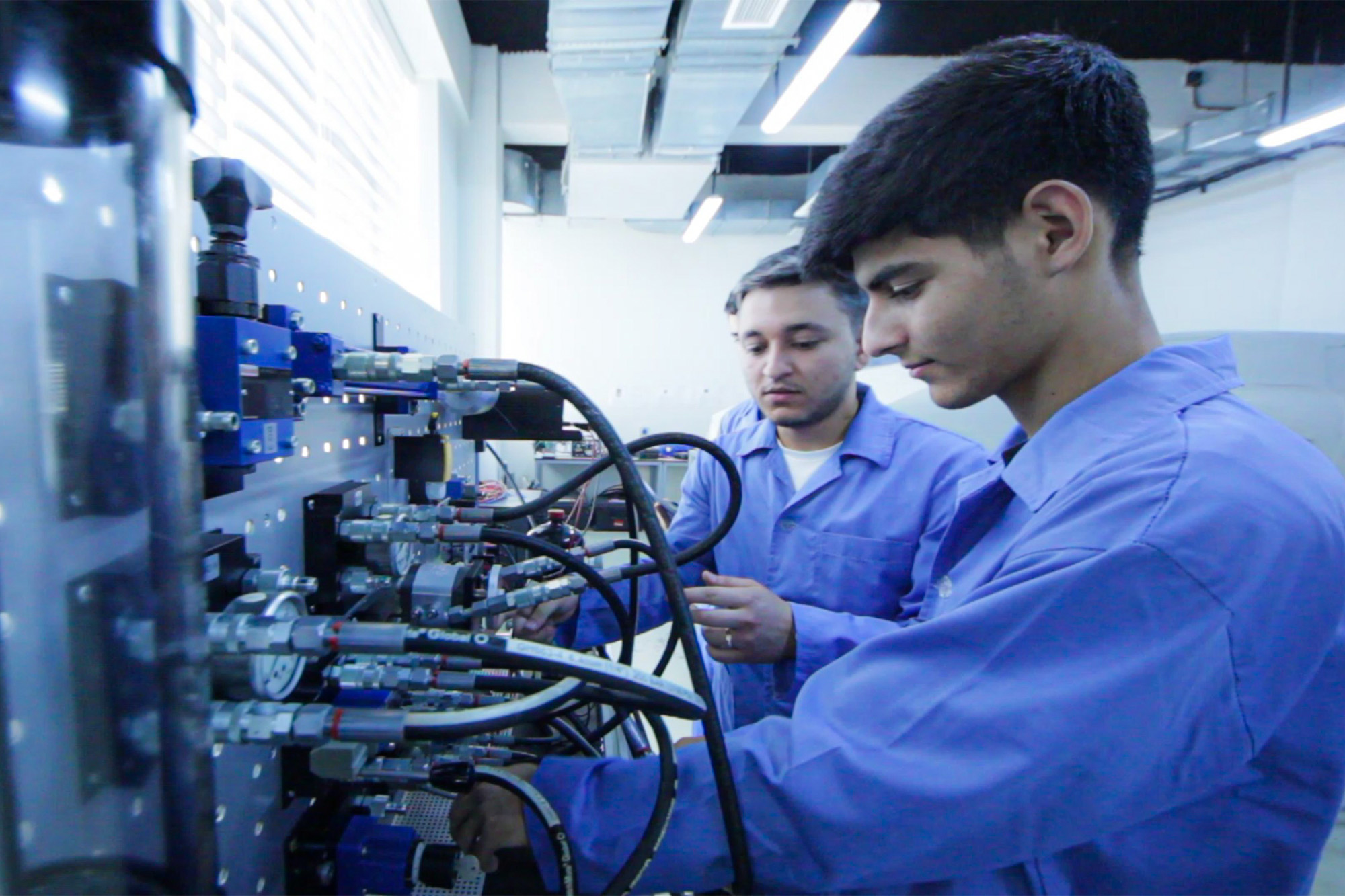
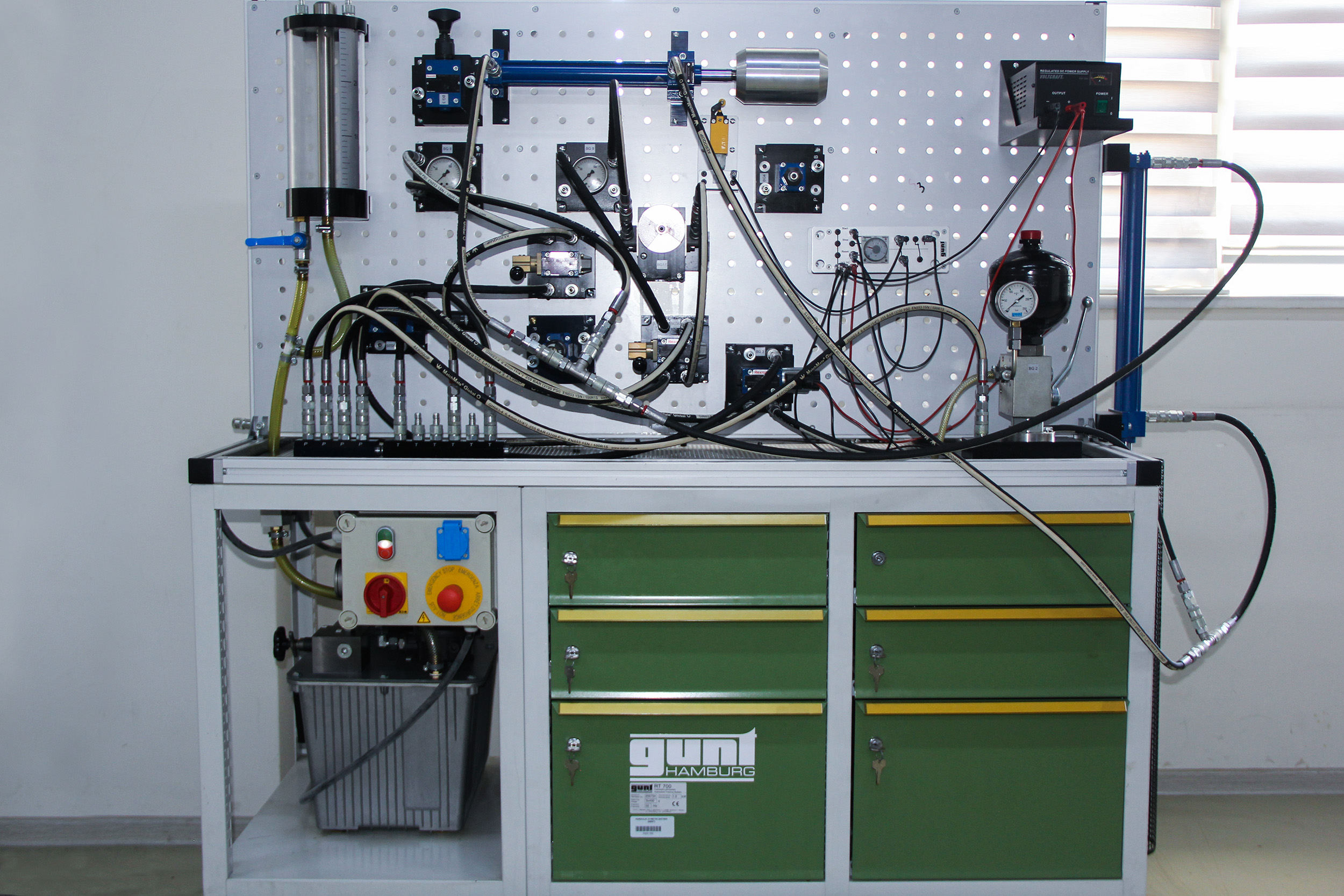
The Mechanical Engineering laboratories of Baku Engineering University (BEU) have been equipped with the latest technological equipment that meets modern standards. Among these research and teaching centers, which serve to reinforce students' theoretical knowledge with practical skills, the Internal Combustion Engines and Automobile Laboratory occupies a special place. One of the modern devices installed in the laboratory is the "Complete Scenario-Based Training Platform for Process Control and Automation" (GUNT RT 700) unit.
This equipment is a universal mobile training stand designed for engineering students and industry professionals to experimentally study the basic principles of hydraulic systems, fluid mechanics, and the operating characteristics of hydraulic circuits. Through the device, which is equipped with pressure gauges, pressure, flow, and energy conversion processes are experimentally examined.
This large-scale, industrial-type training platform is designed for carrying out teaching and research activities in the field of automation and process engineering, and operates on the basis of a closed-loop system consisting of a contractor module, a control console, a fault simulator, and a service unit.
In accordance with the operating principles of real industrial enterprises, the device enables the study of liquid level, flow rate, temperature, and pressure control processes, including cascade control systems. The system features pneumatic valves, various sensors, and digital universal industrial controllers.
The processes of starting up, controlling, and shutting down the system in emergency situations are visually examined through the pumps, heat exchangers, electric heaters, and the central SCADA/process communication software included in the device. It is also possible to conduct practical exercises on the diagnosis and elimination of artificially created faults.
The device, which enables the modeling of modern industrial processes, makes a significant contribution to developing students' professional skills in process control, the design of automation systems, and industrial monitoring technologies. The knowledge and skills acquired serve to help students master the operating principles of hydraulic systems, which are widely applied in fields such as construction machinery, metallurgy and machine-building, plastic and rubber production, aviation, shipbuilding, oil and gas, and the automotive industry.